
"You said ten minutes": ADHD time blindness and what to say instead

They weren't lying at 7:05; they can't feel the hour. ADHD includes what Dr. Russell Barkley calls time blindness: the internal clock doesn't tick reliably. Make time visible outside their head (a timer they set, a clock they can see), give a five-minute warning instead of a hard stop, and name the next single action.
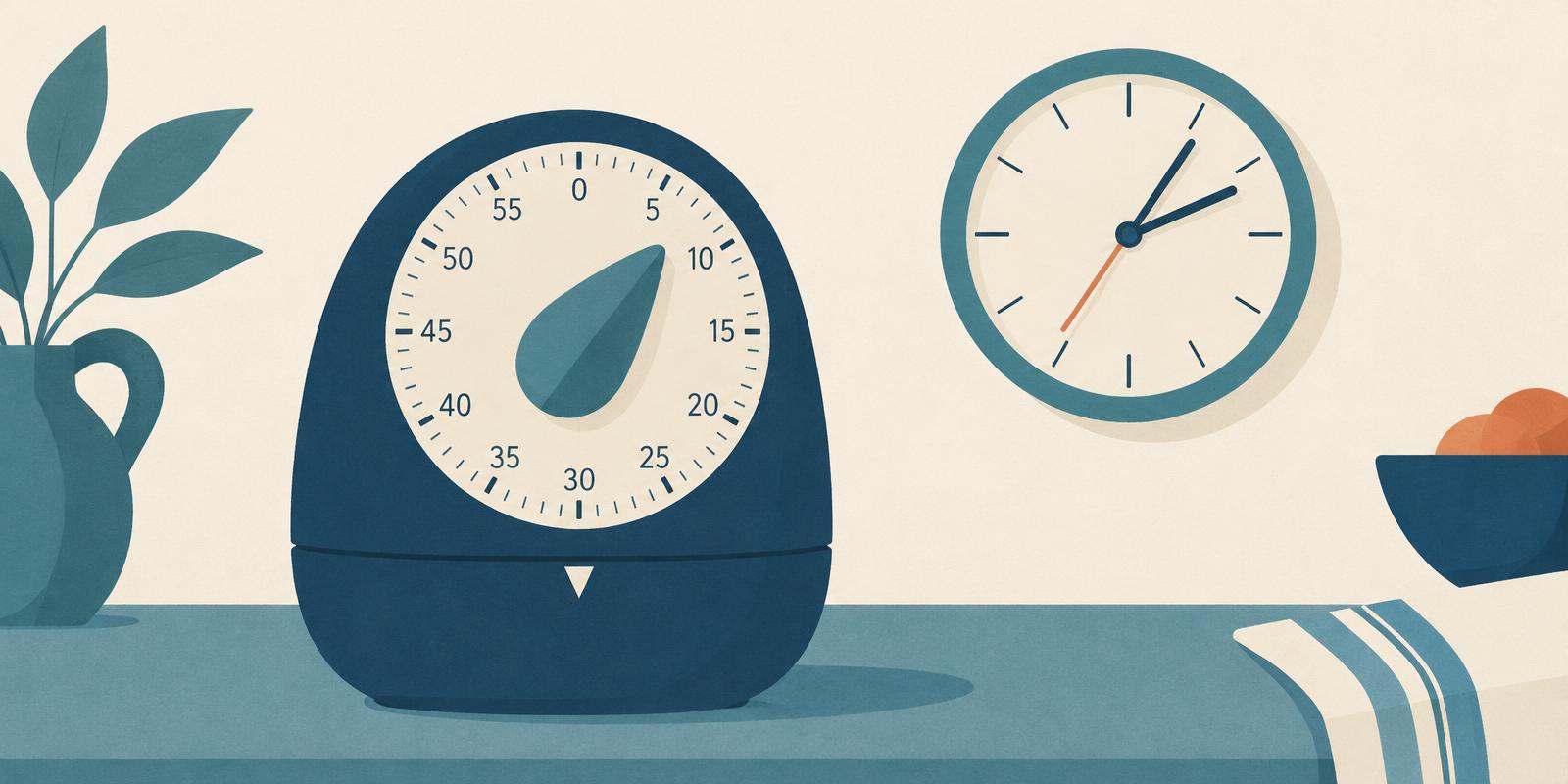
"Ten more minutes." You said fine. That was 7:05. It's 8:10, nothing has moved, and when you say so, you get a look of real surprise, followed by fury that you're "always on their case."
The thing that's hardest to believe, and changes everything once you do: they weren't lying at 7:05. They can't feel the hour.
What to say instead
From the ADHD Vault playbook:
- Make time visible and external:
"It's 7:40 now: the timer's set for 8:00."
Point to a clock or a timer. Don't quote a number from memory; a number they can't see doesn't exist. - Give a transition runway, not a hard stop:
"Five-minute warning. I'll come back at the buzzer."
- Name the next single action, not the whole task:
"When the timer goes, shoes on first."
Stop saying: "You SAID ten minutes. It's been an hour." · "Why can't you just look at a clock?" · "You're doing this on purpose." Each of those goes after something they can't feel, so what lands is the accusation. An accused teenager stops cooperating; you've seen it.
Why "ten minutes" means nothing to an ADHD brain
Dr. Russell Barkley, one of the most-cited researchers on ADHD, describes it as a disorder of self-regulation across time; he's called ADHD "time blindness" for decades. The internal sense of time passing is unreliable: ten minutes and forty feel the same from the inside, especially when the teen is absorbed in something rewarding. It's part of the same executive-function picture as forgetting the homework that was done, or starting the project the night before.
The practical consequence: a time instruction has to live outside their head to work at all. A visible timer isn't a crutch. It does the job of a function that isn't reliable yet, and most ADHD adults still use one.
Three set-ups that make this stop being a daily fight
- A clock in every room they use. Analogue, if you can: the moving hand shows time as a quantity, not a number.
- Timers they set themselves. "You set the timer" turns the deadline into theirs.
- Transitions announced, never sprung. The warning is the kindness; the buzzer is the rule.
How ADHD Vault helps
"You said ten minutes" is one of the 19 scripts in the app, with what to try when the timer is ignored and how to repair after a blow-up. The Launch Pad tool breaks the next task into the first step, which is the only step an ADHD brain can start from.
Questions parents ask
"You said ten minutes": ADHD time blindness and what to say instead
They weren't lying at 7:05; they can't feel the hour. ADHD includes what Dr. Russell Barkley calls time blindness: the internal clock doesn't tick reliably. Make time visible outside their head (a timer they set, a clock they can see), give a five-minute warning instead of a hard stop, and name the next single action.
Is time blindness a real thing or an excuse?
It's a well-described feature of ADHD, written about extensively by Dr. Russell Barkley and recognised by CHADD. It isn't an excuse, but it is a reason to change the tools instead of raising your voice.
Will my teen grow out of it?
Executive functions keep developing into the mid-twenties, so it usually improves, but most ADHD adults still externalise time with alarms and timers. The goal is the tools, not the waiting.
What if they ignore the timer too?
Then the timer alone isn't enough; pair it with the next single action and your presence: "Timer's gone, shoes on first. I'll be in the hall." One step, one adult nearby.
Sources
Not medical, legal or advocacy advice. If anyone is in danger, call 911, or call or text 988.