
ADHD-Friendly Colleges: What to Look For
Choosing a college is a huge milestone—but when your teen has ADHD, it's not just about majors, campus life, and dorm rooms. It's about finding an environment where they can thrive, not just survive.
Unfortunately, many colleges promote "inclusive" and "supportive" environments without offering the real, practical support ADHD students actually need. And most admissions offices won't tell you the full story unless you know exactly what to ask.
The right school can make all the difference—for your teen's confidence, independence, mental health, and long-term success. The wrong fit can lead to academic struggles, isolation, and dropout.
Let's break down what truly ADHD-friendly colleges look like, what red flags to watch for, and the questions that reveal what brochures won't tell you.
Red Flags: Signs a College May Not Support ADHD Well
These signs don't mean a school is "bad." But they may signal it's not the right environment for students with ADHD who need structure, accountability, and accessibility. Pay attention to patterns, not just promises.
1. Limited or Generic Disability Services
Every college is legally required to have a disability services office. But "having one" and "having a good one" are very different things.
Warning signs:
The office focuses almost exclusively on test accommodations (extended time, separate location)
No ADHD-specific coaching, planning support, or executive function services
Long wait times for appointments or accommodation approval
Staff seem unfamiliar with ADHD or treat it like a "minor" issue
Website has minimal information about available supports
What to ask: "Beyond testing accommodations, what ongoing support do you offer students with ADHD?"
2. Primarily Large Lecture Classes
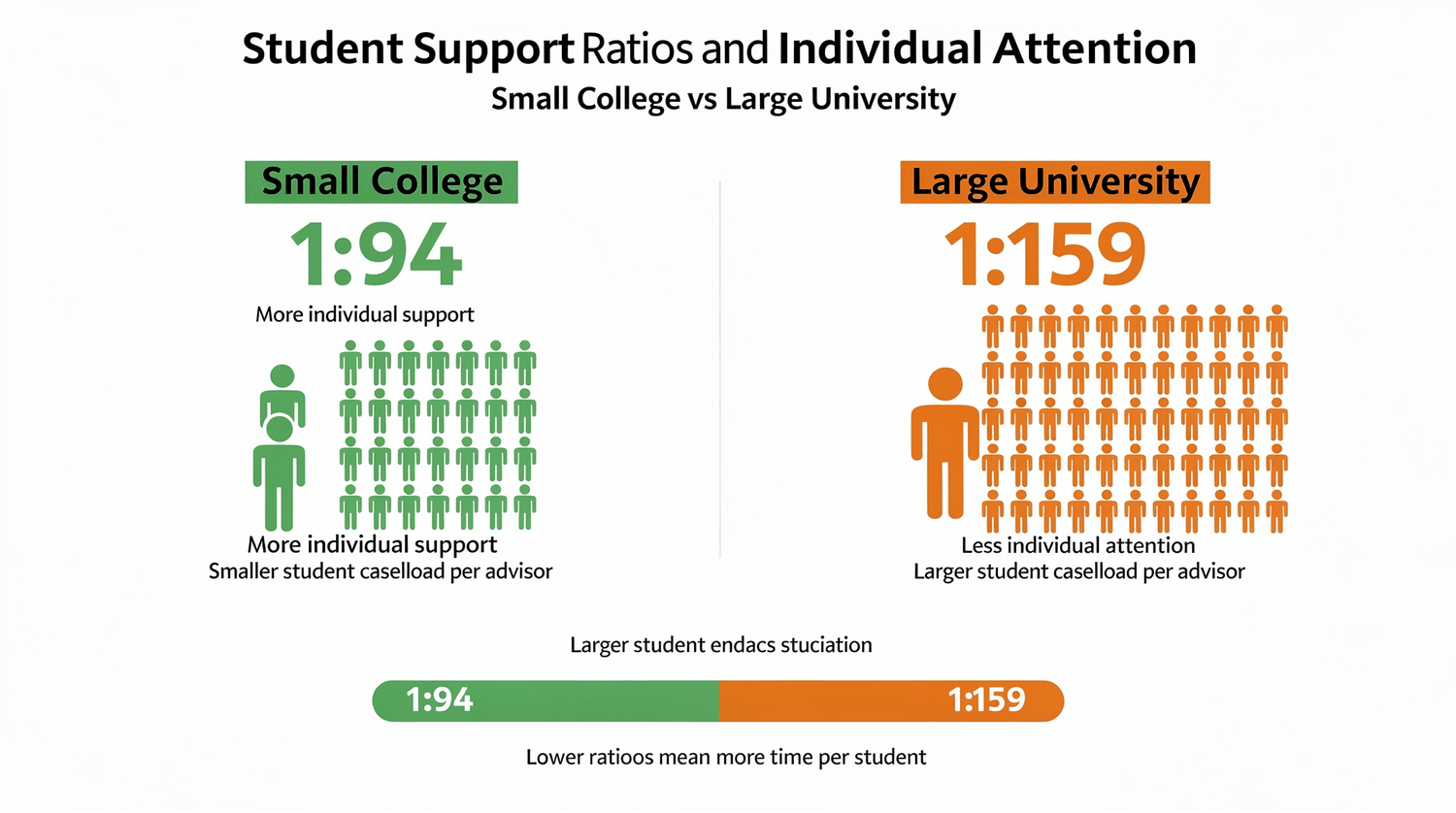
Colleges with mostly large lecture halls (200-500 students) can be particularly challenging for ADHD students.
Why it matters:
Easy to zone out, get distracted, or miss key information
Little accountability—no one notices if you're there or engaged
Harder to build relationships with professors
Anonymous environment doesn't support executive function
What to look for instead: Schools with smaller class sizes, discussion-based learning, or mandatory sections led by TAs that provide more interaction.
3. No Executive Function or ADHD Coaching
Academic advising is NOT the same as executive function coaching. Advisors help with course selection. ADHD coaches help with time management, planning, follow-through, and the daily struggles of college life.
Red flag: When you ask about ADHD support, they only mention tutoring or study groups.
What ADHD-friendly schools offer: Staff trained specifically in ADHD, coaching programs, weekly check-ins, and skill-building workshops—not just "here's the writing center."
4. "Sink or Swim" Culture
Some colleges pride themselves on independence and self-reliance. While these are important goals, ADHD teens often need gradual scaffolding—not total freedom from day one.
Warning signs:
Heavy emphasis on "self-starters" and "independence" in admissions materials
No required first-year seminar or orientation program
Minimal check-ins or early warning systems for struggling students
Culture that views asking for help as weakness
What to ask: "What systems are in place for students who struggle with organization or time management in their first year?"
5. Complicated or Discouraging Accommodation Process
If getting accommodations feels like navigating a maze before your teen even enrolls, imagine what it'll be like when they're also managing coursework, social life, and newfound independence.
Red flags:
Extensive documentation requirements beyond what's reasonable
Long approval timelines (some schools take weeks or months)
Staff who seem skeptical of ADHD accommodations
Repeated requests for "proof" or additional testing
What to ask: "What's the typical timeline from submitting documentation to receiving approved accommodations?"
Green Flags: What ADHD-Friendly Colleges Actually Offer
Here's what to look for when evaluating schools that actively support ADHD students—not just on paper, but in practice.
1. A Robust and Accessible Disability Services Office
This includes:
Easy, straightforward application process for accommodations
Clear timelines and communication
Staff who are knowledgeable about ADHD specifically (not just physical disabilities)
Proactive outreach to incoming students with documented disabilities
Partnership approach, not just compliance
The difference: A compliance-focused office gives you accommodations because they have to. A partnership-focused office actively helps your teen succeed.
2. ADHD Coaching or Academic Success Programs
Some schools go beyond basic services and offer:
One-on-one ADHD or executive function coaching
Weekly check-ins with trained staff
Time management and planning support
Skill-building workshops on organization, note-taking, and self-advocacy
Peer coaching or accountability groups
Why it matters: These programs can be game-changers—especially during freshman year when everything is new and overwhelming.
Pro tip: Some schools offer these services through disability services; others through academic support centers or student success offices. Ask specifically.
3. Small Class Sizes
Smaller classes mean:
More professor attention and accountability
Better engagement and participation
Less chance to "fade out" or get lost
Stronger relationships that support success
Schools that shine here: Liberal arts colleges often have class sizes of 15-25 students. Some universities offer honors programs or learning communities with smaller cohorts.
4. Clear Structure and Predictability
Some ADHD teens thrive on routines and clear expectations. Schools that provide structure help reduce the cognitive load of figuring everything out independently.
What to look for:
Consistent use of learning management systems (Canvas, Blackboard)
Syllabi provided upfront with clear deadlines
Professors who encourage office hours and communication
Regular assignment schedules (not sporadic due dates)
First-year experience programs that provide scaffolding
Remember: Structure doesn't limit freedom—it supports it. The best ADHD-friendly schools know this.
5. Peer Mentoring Programs
These programs pair incoming students with upperclassmen who provide:
Accountability and check-ins
Emotional support during the transition
Practical advice on navigating campus life
A friendly face who understands what freshman year is like
Why it helps ADHD teens: Peer mentors can notice when someone's struggling before it becomes a crisis—and provide support without the formality of office hours.
6. Flexible Assignment Policies or Extended Time Options
An ADHD-friendly school recognizes that learning isn't linear and that one missed deadline shouldn't spiral into academic disaster.
What to look for:
Professors who work with disability accommodations willingly
Policies that allow extensions with communication
"Lowest grade dropped" policies that provide cushion
Make-up exam options that don't require jumping through hoops
What to ask: "How do most professors respond when students need extensions due to documented disabilities?"
7. Mental Health Resources
ADHD often comes with anxiety, depression, or other co-occurring conditions. Robust mental health support is essential.
What to look for:
Counseling center with reasonable wait times (not 6+ weeks)
Psychiatrists on staff who can manage ADHD medication
Support groups for students with ADHD or learning differences
Crisis support available 24/7
Questions to Ask When Visiting Colleges
Equip your teen with the right questions to evaluate support during campus visits. Information sessions and tours won't cover this—you need to ask directly.
To Disability Services:
"What's the process for getting ADHD accommodations approved?"
"Do you offer executive function coaching or ADHD-specific support beyond accommodations?"
"What's the typical timeline from application to receiving support?"
"How many students use your office? What's the ratio of staff to students?"
"Can I speak with a current student who uses your services?"
To Admissions or Faculty:
"Are professors generally flexible with deadlines when accommodations are approved?"
"How do students access tutoring, writing help, or academic support?"
"What's the average class size for first-year courses?"
"Is there a first-year seminar or orientation program that helps with the transition?"
To Current Students (especially ADHD students, if possible):
"What's been the most helpful support you've used here?"
"Was it easy to get accommodations in your first semester?"
"Do professors generally honor accommodations without pushback?"
"What do you wish you'd known before coming here?"
Why this matters: Hearing directly from students reveals what brochures and admissions officers won't tell you. If a school can't connect you with students who use disability services, that's a red flag.
The Complete System
If the college search feels overwhelming—especially when you're trying to balance academic fit, ADHD support, and your teen's independence—the College Prep & Applications System walks you through each step.
Inside, you'll find:
ADHD-friendly college evaluation checklist
Lists of support services to research at each school
Email templates for contacting disability offices
Planning guides for balancing independence and support
Application strategies that highlight your teen's strengths
Timeline and organization tools designed for ADHD families
It's the college prep system you wish you had in high school—now customized specifically for your ADHD teen.
Ready to Find the Right Fit?
👉 Download the free College Readiness Checklist to start evaluating schools with ADHD-specific criteria.
Then explore the full College Prep & Applications System ($77) to guide your teen toward a school where they can succeed—not just get in.
The right college isn't just about acceptance rates or rankings. It's about finding a place where your teen can belong, grow, and thrive with the support they need.
© 2026 ADHD Vault. All rights reserved. No part of this content may be reproduced, distributed, or transmitted without prior written permission. Contact hello@adhdvault.com for licensing inquiries.
Ready for the Full System?
Get all 5 complete systems with 40+ video lessons and 25+ workbooks.

Evidence-based systems designed for how ADHD brains actually work. Created by an ADHD mom who gets it.






Connect hello@adhdvault.com Response within 24-48 hrs
Secure checkout powered by Stripe • 7-day money-back guarantee
© 2026 ADHD Vault LLC. All rights reserved.

Evidence-based systems designed for how ADHD brains actually work. Created by an ADHD mom who gets it.
Connect hello@adhdvault.com Response within 24-48 hrs
Large Call to Action Headline
Contact Us
Open Hours
Mon-Fri: 9 AM – 6 PM
Saturday: 9 AM – 4 PM
Sunday: Closed
Location
2 Cruise Park Rise Tyrrelstown
Dublin 15, Ireland
Email: support@systeme.io
Telephone: +1 234 567 890


Secure checkout powered by Stripe • 7-day money-back guarantee
© 2026 ADHD Vault LLC. All rights reserved.